
A wet floor around the toilet can come from five different places, and some fixes take two minutes while others mean taking the toilet off the floor. A simple dry-and-watch test usually tells you which one you have.
First, dry everything and watch
Wipe the base, the cistern, the supply hose and the floor completely dry. Lay a few sheets of dry tissue around the base and under the water connection, then flush and check back. The first tissue to get wet shows you where the water is coming from.
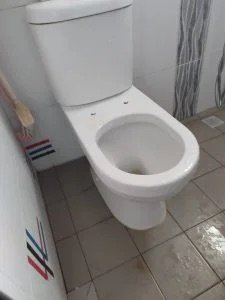
Where the water is coming from
- The supply connection: a drip at the hose or connector behind or beside the cistern, even when you are not flushing. This is often a loose connector or a worn washer
- The cistern-to-bowl joint: water at the back of the bowl under the cistern, mostly after a flush. The rubber gasket or bolts are usually worn
- Condensation: a cold cistern in humid weather gets wet on the outside and can look like a leak. If the water appears all over the outside and nowhere in particular, it is probably condensation
- A crack in the cistern or bowl: look for a hairline crack with a damp line along it
- The seal at the base: water appears around the foot of the toilet after flushing, the toilet may rock slightly, and there may be a smell
What you can safely do yourself
- Close the small isolation valve on the supply pipe to stop the water
- Tighten the supply connector by hand, then a quarter turn with a spanner. Do not over-tighten
- Replace a worn washer or a damaged flexible hose, which are cheap parts
- Dry the area and check again after a few flushes
- Be gentle with the cistern bolts. Over-tightening can crack the porcelain
What to leave to a plumber
- Water at the base of the toilet after flushing
- A toilet that rocks or feels loose on the floor
- Any crack in the porcelain
- A leak that continues after you have tightened the connections
- Stains on the ceiling of the unit below, or water seeping into the floor
A leak at the base usually means the seal between the toilet and the waste pipe has failed, and the toilet has to be lifted to fix it. Until then, avoid using the toilet more than you need to, because every flush can push more water onto the floor.
Why it should not wait
Water at the base can soak into the floor, stain the ceiling of the flat below, lift tiles and leave a smell that is hard to remove. If you live above another unit, tell your neighbour early rather than later.
Related guides: Toilet choke guide · Toilet keeps running? 5 causes and fixes · Ceiling water leak guide.
Need it fixed today?
Send a photo and your area on WhatsApp, and we confirm your arrival time before we come. See our plumber service, or read more guides.