
A bathroom leak that reaches the ceiling below is one of the most stressful home problems in Singapore, because two households are involved. What fixes it depends on whether water is escaping from a pipe or seeping through the floor itself, so start by working out which.
Signs of a bathroom leak
- Stains, bubbling or peeling paint on the ceiling of the unit below
- Damp or peeling paint on walls next to the bathroom
- Grout or the base of the wall that never fully dries
- White powder on the tiles or walls, which is a sign of moisture moving through
- A musty smell, or mould along the skirting
- A water bill that has crept up for no reason
Waterproofing failure or a pipe leak?
The timing of the leak is the best clue. If the stain grows only after the bathroom has been used, with wet floors after a shower, water is probably getting through the floor, the joints or the area around the floor trap. If it keeps growing even when nobody has used water for hours, a pipe is the likelier cause. You can confirm this with the meter test in our high water bill guide.
What usually fails
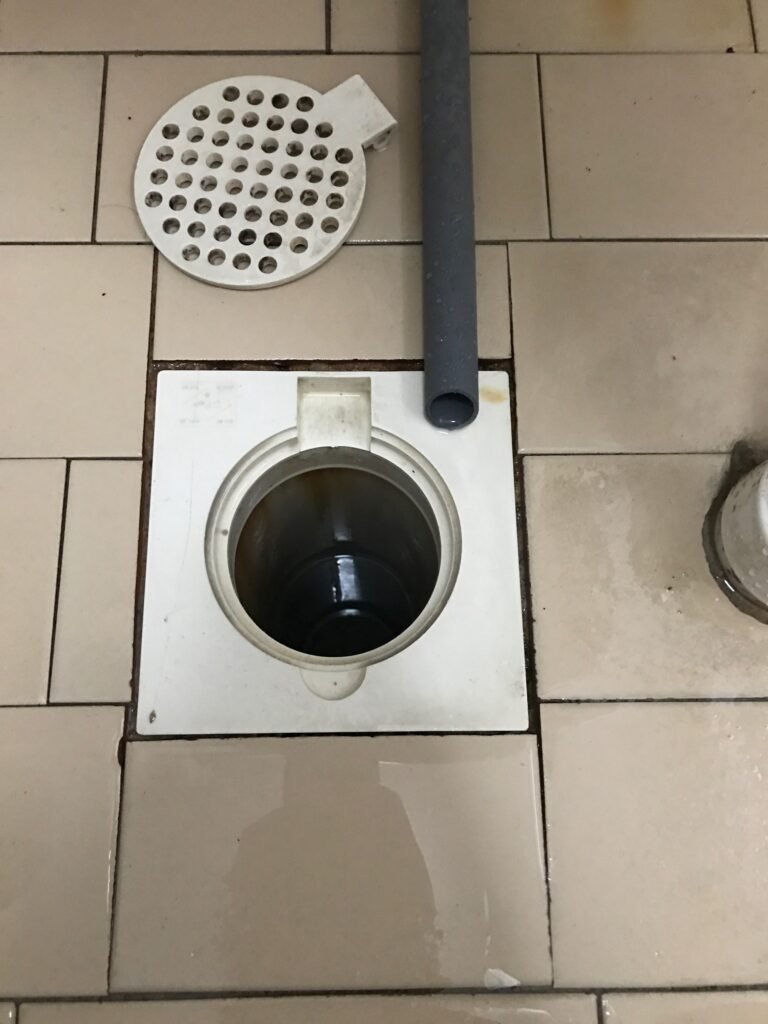
- Cracked or missing grout and sealant at the floor trap, the wall-to-floor joint and the base of a shower screen
- A waterproofing layer under the tiles that has worn out or been damaged, which can develop small cracks over the years
- Cracked tiles that let water through to the layer below
- Leaking joints around the floor trap or in the waste pipe
- A pipe joint inside the wall or under the floor
Repair options, from least to most work
A technician should inspect the bathroom before recommending anything, because the right fix depends on the cause. In general the options look like this.
- Regrouting and resealing: for leaks at joints and around the floor trap. This is the quickest and least disruptive fix, but it only helps when the problem is on the surface
- Crack injection: for cracks in the slab or walls, using a product such as polyurethane (PU) injection. See our {lk('PU injection page','/pu-injection-waterproofing/')}
- Re-waterproofing: lifting the tiles, applying a new waterproofing layer and retiling. This is the lasting fix when the layer under the tiles has failed, but it is noisier, dirtier and takes longer. Some systems can be applied over existing tiles, and whether that suits your bathroom depends on the cause
- Fixing the pipe: if a pipe is the source, no amount of waterproofing will stop it, and the pipe has to be repaired first
The ponding test
After a waterproofing repair, the standard check is a ponding test. The floor trap is blocked and a shallow layer of water is held on the bathroom floor, often for 24 to 48 hours, while the ceiling below is checked for any sign of water. It is the best way to know the repair has worked before the new tiles go down.
If you live above or below the leak
Speak to your neighbour early, share photos with dates, and agree a time for the bathroom to be checked. If you cannot agree, or the source looks like a shared part of the building, contact your management office or Town Council. The source of a leak is normally fixed by the owner of the unit it comes from, but this is general guidance and not legal advice. Our ceiling water leak guide explains who to call in more detail.
What to do right now
- Use that bathroom less while the leak is active, and wipe the floor dry after each use
- Take dated photos of the stains and of the bathroom floor, walls and floor trap
- Note when the leak appears: after showers, after rain, or all the time
- Do not paint over the stain until the source is fixed and the ceiling is dry
- Check with your management office about renovation rules and hacking hours before any tiles are lifted
What to send us
Send photos of the stains and the bathroom on WhatsApp, along with your floor level, your building type and when the leak appears. We look at the problem and tell you honestly what we think it is before any work is agreed.
Related guides: Ceiling water leak guide · High water bill: how to find a hidden leak · Balcony water leakage repair.
Need it fixed today?
Send a photo and your area on WhatsApp, and we confirm your arrival time before we come. See our waterproofing and leak repair service, or read more guides.